Wednesday, January 16, 2013

Ping pong balls !

Let's assume we have an endless resource of ping pong balls. We would also need a container for them, let's say the size of our beloved sun. Now that would be one huge amount of ping pong balls don't you think. if you dare, you could even calculate how many. A human-like character the corresponding size is holding the cup and giving the cup a flip and sees the ping pong balls go around. What does it look like? Ping pong balls? No. it looks like some sort of white liquid that splashes inside the container.


Let's make another container of basketballs. Now we need another container. How would that look like? Most likely that would look like red liquid that moves in a slightly different way.

Now our imaginary character, who considers himself a scientist, looks at these white and red liquids carefully. He sees them move in different ways and tries to think what it means. There must be a parameter in the liquid that makes it move in a different way. He decides to call it viscosity. Or - let's call it discocity just to separate it. And because it's groovy. Our imaginary scientist carries on his studies with the liquids and comes up with a couple of equations that represent the behaviour of the liquid, discocity being one of the parameters. Our huge scientist is quite pleased with this formula, it seems to apply well with the liquids. And throw in a massive vessel of tennis balls, and we have yellow liquid. Theory confirmed.

This is an example of plain physical emergence. A complex phenomenon on a meter-scale (balls bouncing from each other) appears very different on a million-kilometer-scale. One physical effect disappears and another appears. The system consisting of a trillion ping pong balls is not trillion times more complex than bouncing of one ping pong ball (which is actually quite complicated come to think of it) What I mean to say, for the huge scientist, for reliably predicting how the macro-liquid behaves, it would not be required to model all the bouncings of the little ping-pong balls, it only needs a formula that can be tested, and this discocity-formula seems to apply. This new physical law is a statistical approximation, which applies only to that scale, and when there are billions, trillions of ping pong balls. The formula would not work with ten balls. Of course, we as meter-scale humans, have never had any need of such formula, and I doubt we will. (If we ever do, consider me for the formula naming)

I guess you already know what this is coming to. Our dear Newtonian laws were created by studying the nature, now knowing much about what lies beneath - electrons, quarks and beyond. Does it reduce the value of Newtonian physics? Does it make it wrong? No it does not, as long as we know the scale where it applies. It applies on meter-scale, and when not approaching light speed. Both apply to most people I know.

Tuesday, October 16, 2012

Quantum computer

Have you heard of the quantum computer? A computer that would use photons instead of electrons as the medium of computation. Do you know what it is, really? Would you like to know? I knew you would.

There is a phenomenon in quantum physics called entanglement. It means that two particles that originated from the same quantum phenomenon, share a common state (typically the particle spin), and when you measure the state of the other, the other particle's state is immediately known too, even though both of the particle states were unknown just before measurement. So the particle states are unknown, but still somehow coupled.

This extraordinary phenomenon is very uncomfortable, as it seems to transfer information (the state of the particle) faster than speed of light. And as Einstein stated, this should not happen.

Entanglement has one very interesting theory to explain it: the parallel universe theory. Every time a pair of entangled particles are formed, the universe splits into two parallel alternatives. One of them contains state AB and the other BA. Both of these universes exist at the same time, without anyone knowing. When first particle is measured, one of the parallel universes realizes, and the other disappears. Or does it? What happens to it?

Quantum computer was designed as a test whether this kind of parallel universes actually exist. Sure, it would be nice to know if such things exist, as everything you do is based on quantum physics, including decisions you do inside your brain! Think about it. In that parallel universe you decided to finish your studies and ditch your boyfriend. That would make a great romantic comedy. Oh, it's been done? But I'm sure you didn't realize the movie is about quantum computers.

Anyway. the test would work OK with a 1-bit computer. But the scientists found something funny. If you add more bits, which are also entangled, let's say 32 bits, the computer will contain 4 billion parallel universes (alternative states) that means all of those possibilities exist simultaneously. This is where the scientists got really interested. Such computer could perform incredibly well in tasks where parallel calculation is required.

It is sometimes quoted that to decrypt AES-256 it will take all the computers ever built, and a time longer than the age of the universe. But imagine if all the possibilities could be tested simultaneously. The quantum computer's state would divide into an infinite number of parallel states which each make make a guess of the pattern. One of these parallel routines hit it right, and the entire construction will then collapse to that state.

Such computer will be extremely hard to construct, for a number of reasons. To maintain a quantum state and keep it from collapsing, the particle should be completely isolated from its environment. And this means total isolation. No warmth, no hitting other particles, no magnetic fields or other fields, nothing - at least in theory. Having said that, I should also mention this. First computer utilizing quantum calculation is on market, providing a variety of programming environments such as C++, Java, Python, SQL, and MATLAB. Extremely cool.


So this is the situation now. For some unknown reason, sponsors like military are more interested in funding projects that develop decrypting computers than scientists that study the essence of the universe. The original purpose of quantum computers has silently faded in background, and the quantum computer has shifted from science into engineering. The nature of entanglement remains still to be explained. Maybe we will never know if parallel universes exist or not. At least I don't believe there is a python script in the new D-Wave computer to tell us that.

Friday, August 31, 2012

Paradise island

Once upon a time there was a beautiful island in Oceania. People living on the island were living out of the fish in the sea, and there was plenty of it. People were happy.
The island itself was originated from an underwater volcano and a coral reef on top of it, and was rich with minerals. But the inhabitants of the island did not care about such things. Until something happened.

The world changed. The paradise island was no longer isolated. The men that arrived from outside world said that they would very much like to have some of the grey rock that lied here and there all over the island. Why not? It's just rock. The people on the island were not planning any particular use for the rock, so the visitors could as well have it if they so much wanted. But there is more. The people promised to even pay money for it, and money is something that the people on the island were not yet familiar with, but they had heard that it is something worth having.

Machines came. Mining started. The foreigners built a harbour for transporting the mineral, phosphate they called it, and of course people on the island started getting money. Life changed. Suddenly fishing was no longer enough. There were more important things to do, because it was possible.

Time passed. The villages turned into towns. Roads were built. And now that the people had roads, they could buy cars. And they did. Driving their cars around the small island from village to village become their primary hobby. The people consumed more gas per person than anywhere else in the world. Radio, TV, air conditioning, all the things that a modern family needs. All imported. Nobody was fishing anymore, why should you when you can buy imported fish.

The middle parts of the island were already badly scarred, and the machines were approaching the shores of the island, where people lived. But as people had adopted a consuming lifestyle, they were depending on the income from the mineral. There was no way to stop. But the thing that came across nobody's mind was that the mineral in the island would not last forever.

Now this is all starting to sound so depressing. There are too many sad stories. Let's see if we can do a happy ending, fairy tale style. It's more fun that way.

The king of the island stopped his car. He had been driving his Cadillac three times around the island that day, and he was bored. Driving inland was not popular, only foreigners did that, islanders only drove on the coast. But this day, the kind decided to drive inland. What he saw shocked him, as he realized his beautiful island is deserted, and if this is allowed to continue, they will not have a place to stay.

That evening the king appeared on the paradise island local TV station, as he knew that everybody would be watching TV anyway. He told what is happening, and what will happen soon. And he made a proposal: let's get our island back! People cheered in their homes.

Next day the people on the island started collected all the money they could get. After selling all the cars, TV's and other goods, there was some. And lead by their king, they marched to confront the executive of the multinational mining corporation. They said they wish to buy the corporation out.

Time passed. It took years to bring back the soil, but today the islanders are experts in planting forest. The trees are growing back. And the people enjoy fishing again.


Sunday, July 22, 2012

What if electricity ceased to exist

A friend asked me a question - just to make some intelligent conversation - that what would happen if electricity would be no more.

After a small moment of thinking, I answered that everything, all living and non living things, this earth and all other planets, the sun, our galaxy and all other galaxies would stop to exist, and nothing would be anymore. ABSOLUTELY NOTHING.

The disappearing of stars and planets can not be called an explosion. Explosion is a chemical phenomenon and chemistry is electricity. After electricity ceased to exist, there is no chemistry anymore. The stars and planets also do not disintegrate into atoms, as atoms are kept together by - yes, electricity. Atoms and ions will stop to exist. Electrons are no longer negatively, and protons no longer positively charged.


There can not be any solid objects. The concept of objects being solid (atoms attaching to each other) is all electricity. Electricity also prevents atoms from interlacing. It is electricity that stop you on the ground, otherwise you would continue falling through the surface of the ground! So from this point on, particles will float freely, and not form any structures.


You know what would also disappear? light and temperature. The electromagnetic field smallest possible unit - quantum, happens to be photon. So photons would also disappear. As photons do not exist, all lights will be turned off. But there will be no one to shiver in the dark. (Note: mobile phones do not work either, but you already guessed this, right?)

So what is there left to be but darkness and void? Assume that the unification of theories is kept out of this and we assume QED only disappears and QCD would still exist, quarks will still form baryons. That means protons and neutrons will still exist. And the protons and neutrons will still form ions, atom nuclei, but the electrons have left them permanently. What would a world be like, when there is a porridge of nuclei and electrons, but they can not form atoms, and nothing is solid, particles are drawn together by gravity, and there is no electricity to keeps particles from a decent distance from eachother?

The answer is obvious. All stars and planets would immediately collapse into black holes. Those would have to be non-radiating black holes, because gamma-rays have gone too.

That's what would happen. In fact, what my friend really meant that what if man was no longer able to use electricity as a power source. I kind of knew this. But I found the question so much more fun to answer after a small misunderstanding included, don't you think ! Also I wanted to show off. I'm such a selfish bastard.


Wednesday, June 6, 2012

Paradoxes

"Dad, what is a paradox?" asked my son one day. This is a difficult question, so how to explain it to a kid on first grade at school? Here's how I answered:

A paradox is something that is is both true but still impossible at the same time. Here's an example: a man is named "unnamed". So he has a name, but at the same time he is unnamed. So that is a paradox.

Yes, I know, the above is not really a good example of a paradox, it is more like a game of words. Similarly, a boy's name could be "girl", or a dog's name could be "cat". Stupid, really. But I think I managed to explain what this paradox thing is all about, briefly and using an easy-to-understand example.


Actually, what first popped to my mind was the classic "I am lying" paradox. A person says "I am lying", but how can he lie if he just stated truthfully that he is lying? That is a classical example of logical paradox. But on the other hand, if you are a mathematician, the above forms an equation which is just plain false. Anyway, I found the liar paradox too hard to explain.

So are there real paradoxes, things that really are impossible but true at the same time? One that is not a word game? I think some could be found in quantum physics. For instance the tunneling phenomenon could be considered as one. No particle can exceed the speed of light, ever, except during tunneling it temporarily can. Although, if you consider particles as a field covering all space-time, which is actually is, it is no longer a paradox.

Still looking for a real paradox.


Sunday, March 25, 2012

Work cultures in west and east

There are people that think their work career is like a life imprisonment and getting a pension is like a pardon from it. Even if they could enjoy their job, they refuse to do so. After all, it is not the job's purpose to be fun, its purpose is to provide money for your free time, right? So that in free time you could have hobbies, and hobbies are the ones that on the contrary to work, cost money and give pleasure. There is a clear line, isn't there.

Why is this? There is a voice in our head that commands us to move forward. The position you are currently in is not good enough for you. You must try harder. You should aim higher. Try harder. You will be a millionaire, or more. Only so few of us will. But if you do, the voice will not stop. And the inner voice comes from our culture of valuing money and power, and is fed by TV, movies, commercials and so on.

The above applies to the western world.

The traditional eastern culture is very different. In fact it is pretty much the opposite of what is being taught in the west. It teaches you to satisfy to your position, and be happy of what has been given. It has always been like this, and the social class system has supported this culture. All your neighbours work as hard as you do, and are pretty much as wealthy as you are. Those that belong to a higher social class (meaning richer than you are), seem from another planet, and are strictly separated. So there is nothing to be jealous about, and nothing really to pursue, except of those little everyday moments of happiness, which are easy to accomplish.Even the village chief is automatically the oldest person, so you can not challenge him for gaining more power.

This was true until now. The class system has been ruined, the world is becoming more and more western. Those who happily ate rice all day long, watch TV and think that we really should be eating meat. Those that walked everywhere, want a car as the commercial says that everybody should have one.


What the economists call "global growth" is actually an increasing need of needless consumption. This can also be seen in the world population. it is needless to say that the end is not going to look nice.

Sunday, February 26, 2012

What emotions really are

I've been told that the difference between man and machine is that man can feel, machine can not. A machine does not have emotions. As a sceptic, I automatically question this, and the first most obvious thing that should be clarified is what emotions are in the first place. This article tries to answer that question.

Let's look at some of most common human emotions and try to find a common nominator. For instance: jealousy, anger, love, loyalty, sorrow. Those are some very basic emotions that we all feel in occasions. Why? I think I know why.

On first glance it might seem that the human intelligence was the first thing to control our behaviour and the emotions would be some kind of secondary system on top of that, in occasions taking control if we are not careful. Actually it is the opposite. It is the emotions that are running the core program in our brain and the so called intelligence is just filling the holes.

The purpose of this emotion core program is nothing less but to keep human race alive! This is all actually very simple. We evolved to feel happy about things that support staying alive, and to feel bad about things that are harmful. To be more precise, the core emotions program could be actually compared to a list of fuzzy logic commands. Those can be even listed. See below a list of fuzzy-logic kind of simple commands, that control human (and almost every mammal) behaviour by means of emotion.
  • Stay alive
  • Breed
  • Take care of your family
  • Favor genetic versatility
  • Belong in a tribe and protect it
  • Lead your tribe
  • Obey your tribe leader
  • Challenge your tribe leader

These rules would explain many human emotions and behavioral oddities. Let's take envy as an example. How is envy explained as a core logic? In two ways. It can either be explained as challenging the leader, in which way automatically the group will get the strongest possible leader. Or it can be explained as a built-in need of collecting things and goods for survival.


A curious thing to notice in the above list is that the rules conflict with each other. This is not a mistake. Being fuzzy logic, different individuals interpret them differently in different times. Example: For human kind survival it would have been important to both take care of family and children, but also to mate as much as possible and with as many people as possible, to give evolution a change! This conflicting fuzzy logic still haunts us and leads us in trouble.

Now we have defined emotions - they are a core program that give simple primary rules that help a living creature to survive.
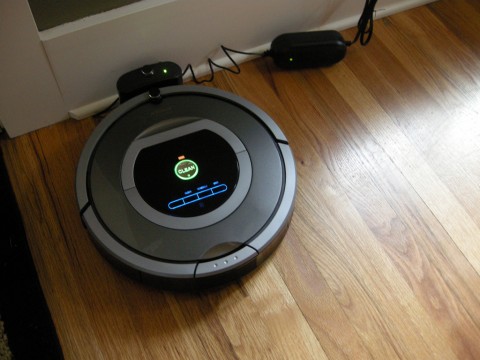
But can this be applied to machines? Let's take a robot vacuum cleaner as an example. When it starts running out of battery, it's fuzzy programming logic will start raising a signal that it would be time to return to the dock. Not necessarily does it do it immediately, but when the need of power exceeds the need of executing the other goal (cleaning) then it will. You could as well call this driving force "hunger". Does it really feel hungry? Does a vacuum cleaner really feel happy when it gets its work done? You know, these are just words we give to electro-chemical phenomenon that occur in certain circuits. If they can occur in organic circuits, why not metal-silicon circuits?


Friday, December 23, 2011

Gingerbread baking as aquantum phenomenon

Baking gingerbread is a christmas tradition in where I come from. Now a very peculiar thing happened to me while my wife was doing that, and it made me wonder the true spirit of the event. See, my wife put the gingerbread into the oven and asked me to wath that it does not burn. I wanted to clarify some things about it, so I asked her that is she sure that wathing will prevent it from burning. So I did what was told. I wathed, and she was right, the gingerbread did not burn. During the next round I found an interesting newspaper article, and forgot to look. The gingerbread ended up black.

I am amazed! This means two things. First of all, baking gingerbread in our kitchen oven must be a true quantum phenomenon. This alone is extremely surprising. But not only that, also it means the Copenhagen interpretation of quantum mechanics, presented by Bohr and fellows (and which is nowadays considered as old-fashioned and misleading) has been proven right using a real-life experiment!


Wednesday, December 14, 2011

Of lazyness and comfort

Man's gratest inventions are result of his lazy nature and predisposition to seek comfort.

For instance being able to warm up your nice little cave and cook the food using fire, at the same time providing light for doing some decoration on the walls, is just comfortable, isn't it?

  • A lazy man tired of dragging heavy items, invented the wheel
  • A lazy man tired ot pulling wagons, invented domestic horse
  • A lazy man carrying water buckets invented the water pipe system
  • A lazy man that didn't enjoy the smell, inventedsewer system
  • A lazy man that had terrible hand writing, invented typewriter

Next time you are being called lazy and inefficient, you can quote me by saying: Lazyness is a fundamental, built-in quality of man, and has caused man to create all the inventions so far. Had man been truly diligent, we would all still live in that cave and eat raw flesh, because it is possible to survive with that.

And yes, lazy we still arel, as there are still lots of new inventions to be made. Be lazy, and be proud of it!

Exoplanet

So they found an extrasolar planet where conditions are very much like ours in here. Now I'm not even sure how should I deal with that piece of news. Should I be excited? Why?

First of all, I don't think traveling to the planet is going to be possible. Although it is fairly close (352 light years away), it is still quite far. Let's do some calculation. One light year equals 10^16 kilometers. According to some references, he fastest spaceship human has built so far, has travelled 15 kilometers per second (which is terribly fast if I may say). Let's use that speed. We will divide 352*10^16 with the speed and get the travel time in seconds. The result is a bug number, which we again divide with 60*60*24*365 to get the travel time in years, instead of seconds.

The travel time will be 7441 million years. That's way longer than the age of human species. Not feasible. We will have to settle and study the planet remotely.

Why? Is the planet more interesting because it is like our planet? I know. The discovery encourages speculations of extraterrestrial life. But on what grounds? Is it more likely to find life on similar planets than earth than different planets? Is it likely to find life on exoplanets at all?

Every mathematician knows that making a statistical analysis becomes unreliable when N is small, and completely pointless when N = 1.

Monday, December 12, 2011

Colors of the world

We see our world in colors. That's very natural. It is so integral part of our world that we could not imagine a world without colors. When I was a kid my father took a lot of black and white photographs with his camera. I asked him that why do they look like that, with no colors and all. He explained that the color photographs require more complicated technology than black and white. The answer did not satisfy me - I claimed that wouldn't it be more simple to picture the world as it is rather than to filter some very carefully selected colors (like red, green, yellow and so on) of the picture out and leave some (like black and white) untouched. To me it seemed that it would require more advanced technology. i don't remember if my father could answer anything to that. Maybe I was a difficult kid with all my questions.

The true color of an item is actually a function of amplitude that it reflects for different frequencies of white light. White light of course is something that has an equal amount of all frequencies of light. The amount of different variations and combinations of colors is endless!


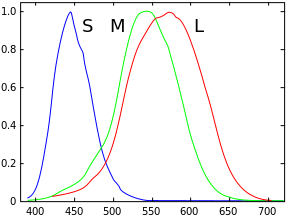
How does then human eye perceive color? The retina inside human eye has dedicated cells to react in three different wavelengths. Only three. This means that of all the different wavelengths most are totally ignored, or they are observed as combinations of colors. For instance if there is an object that reflects light at 500 nm wavelength, we most likely observe the object being cyan. However, we also observe the combination of blue and green lights as cyan color. With our eyes, we just can't see the difference.

The above leaves one question open: why? Why do we recognize some frequencies of light so well and some roughly? There must be a reason, and the reason must be in human evolutic history.

For evolution in general, it must have been quite important to distinguish green leaves from blue sky and water, to be able to navigate and move quickly, and to be able to find water. Originally it must have been a great asset in both hunting and escaping hunters. I imagine this skill must have developed quite early, after life moved from sea to land.

What about red then? What could have been the driving force to make us observe red light? When did that happen? Which animals are capable of observing red anyway? (For instance bulls do not, which means the matador's equipment could be practically any color, causing an equal effect.) Maybe red color has come to enhance the seeing capabilities, because most of the colors you find in nature (plants, rocks, sand, dirt) are in this specific area, so to be able to observe your surroundings it was very useful to recognise the frequency of the color more specifically, Now it was able to recognise for instance brown rock from green grass, and see where to go next.

The fact that human can observe three colors also lead to technical decisions: all video and image formats, television and camera hardware, transmission protocols etc. they are all based on the assumption that vision is composite of three colors. And this is the case when we talk about humans. Imagine that an alien race would come to earth that has a similar vision but perceives more colors, or colors of different wavelengts than us. They could not watch TV or movies, use our computer monitors, see color prints, or even those old-fashioned photographs properly!


Monday, November 28, 2011

Ladders of philosophy

A person can quite easily evolve his thinking capabilities in everyday life. Let's take an example. Taking out the garbage is ordinary physical work, while thinking about taking out the garbage is a small-scale philosophical experiment. Here a person has climbed one step on the philosophical ladder.

Next step in this ladder is to evaluate the thinking process, and during this evaluation, observe what is a person's motivation to use brain capacity to think about taking out the garbage. Obviously, the highest philosophical ladder is reached when one comes to the conclusion that thinking about thinking about taking out the garbage is a waste of brain capacity and falls into a state where there are no thoughts at all.

Not all persons understand the importance of climbing philosophical ladders. Such persons insist on sticking on the first stage on the example given above. Such persons, let's say for example a wife, will use first seemingly strong arguments, then brute force to convince that it is actually a good idea to take out the garbage, but in reality that kind of persons are just trying to limit one from improving his mental capability.


Tuesday, November 8, 2011

Three (?) phases of matter

(pic from www.stonecropgallery.com/artists/caleb.php)

At school I was taught that the matter has three phases: solid, liquid and gas. That was given as a truth, and it remained as such for a very long time. All the phases could be easily understood. The little physicist in me was satisfied. Everything was explained logically and for instance water, the most familiar and friendly of all elements, could be seen in all its states, and even transitions from one state to another can be observed visually. Everything made sense. How much I miss those days.

The first crack in my illusion of physical perfectness was caused by bubble gum. It was suddenly brought to my attention that there are materials that are neither solid nor liquid, but in between. They do not have a melting point, but the degree of "liquidness" does depend on the temperature. "Amorphous solids", someone explained to me. I was not satisfied with the explanation, I felt like I had been betrayed. But it did not end here, it was only getting worse.

Plasma was introduced. If you heat matter enough, electrons will have so much energy that they escape the orbit of the atoms, and the matter will become a mess of ionic nucleons and electrons. The mess is called plasma. But if you heat it even more, the nucleons will no longer stay together but the quarks will instead lose their connection. The quark plasma can not be created in your fireplace, not even in nuclear plants or bombs, but that was the temperature a couple of nanoseconds after the Big Bang.

From hot to cold. Satyendra Nath Bose presented a theory that in very cold conditions matter would start behaving very differently from normal. Bose-Einstein concentrate is again a new phase of matter.

A quick look to reference material reveals the horrible truth: if you count everything, there are nearly 20 different states of matter. It is completely up to you what to include in the list. It really depends on the matter we are speaking about, and who is listing. Chaotic.

I am now relying on quantum physicists to convince me that in fact there are no phases of matter at all, there is only energy. The so called "phases" are just an illusion that is caused by complex emergent properties of how different kinds of quantum fields interact with each other. And really what determines different melting points for different materials is - at the end - the properties of the world: Planck time and distance, cosmological constant, number of dimensions. Those determine all phases of matter, and all melting and vaporisation points. Mathematic simplicity.

That is what I would like to hear, it would bring back peace.

Sunday, October 16, 2011

Modeling the universe

Let's play a little mind game. Imagine that you knew everything about physics and you had unlimited computer processing power. Using a computer program you could realistically model how particles interact with each other. What could you accomplish?

First of all, you could simulate all chemistry. Just given the formula, and you could calculate its melting and vaporizing temperatures and other characteristics. After all, chemistry is all particle physics. I guess that can be done even today, to some extent.

Next, you will model a couple million billion particles that are shaped like a vacuum cleaner. This experiment sucks, you think. Let's try something more interesting. You will model a life form - bacteria, and watch the life form fill the memory of your laptop. How nice.

How about modeling a human brain? Let's do it. After all we do have unlimited resources. The brain is modeled, but is very little fun, because you did not model a mouth for it to speak its thoughts. So you don't even know if your brain is  conscious. After a short while you get bored of your brain-experiment and stop the simulation, but after doing that, you stop and wonder that did you just kill someone.


You buy some more memory for your computer, as you intend to simulate the entire universe. Now this adding quite a lot of particle x, y and z coordinates and quantum states. As you would like to avoid this, you decide to model the singularity where it all started instead. It will be much easier that way. Your own personal universe starts developing.

Now assuming that the physics of the modeled world correspond to physics of our world, what's the difference between the modeled universe and our universe? Nothing, really.

But there are some requirements to the computer. The computer must be very large. Most likely it should weight more than the system it is modeling. So if it models the state of every particle in the universe, the computer would weight way more than our current universe. Also, the time that it takes for modeling will be at least same than time that is being modeled, which is the age of the universe. The performance of the computer... well, we run out both the prefixes of flops and the Planck constant.

And there is one more limitation. This modeled process should follow the principles of quantum mechanics, to be able to simulate our world. And due to those principles, it is impossible to measure anything without affecting it. If you wanted to really create a model of  universe, you should isolate it completely from outside world, to protect our modeled word quantum state from decoherence. You should start the simulation and never have any interaction to it. And that means you will never know if it works or not. Or if you take a peek, you, the modeled universe's Creator, will alter it.


Friday, September 2, 2011

Mirror


This is a puzzle that I created for my own amusement when I was about 10 years old:

A mirror is 2-dimensional, and it reflects a projection of 3-dimensional objects. Those two dimensions are: up-down and right-left. Now have a look at a mirror and raise your right hand. Your reflection seems to raise his left arm. If your T-shirt has some text, it also seems to have inverted from left-to-right to right-to-left, making it difficult to read. Conclusion: mirror seems to invert its left-right axis, but NOT its up-down axis. This is odd. How can it be? As scientists, we should make a hypothesis on what could cause this phenomenon ant test it!

Maybe mirrors have some kind of grid creating a polarization-like quality that explains this effect. Let's try to rotate the mirror 90 degrees. if this quality is in the mirror, then it should stop inverting left-right axis and start inverting up-down axis. A good scientist will always test his theory. After rotating the mirror, no change. No luck here, so this is obviously not the cause.

Another theory: maybe this is because of the alignment of human eyes: after all they are aligned horizontally and not vertically. Horizontally alighed eyes cause left-right to be inverted. If eyes would be aligned differently, the result would be different. Can this be tested? I close my other eye, no change. I even tilt my head so that my eyes are in different alignments, and still all text reads backwards, never upside-down.

After some thinking, naturally, I did come to a conclusion. What about you?

Monday, August 22, 2011

How speaking works

Exactly how does speaking work? What happens in human brain? Surely it requires a lot of processing power? To be able to speak meaningful sentences out fluently, one must be able to plan what to say next, organise the words of the current sentence into correct order and pronounce the current word correctly. And speaking can not take your whole attention, you must be able to for instance walk at the same time.


According to studies, following parts are most active when we speak:


  • auditory cortex 
  • lateral sulcus (producing spoken language)
  • temporal lobe (meaning of heard words)
  • Wernicke's area (language comprehension)
  • Broca's area (speech generation)
  • motor region
What does this mean? How do these areas work together to form speach? I assume it all goes like this: in the brain there are multiple processes. Lateral sulcus is working - together with memory - as a preparatory process: it works in advance and prepares the abstract ideas that we are about to speak out. These ideas are not yet at this stage connected to words. The next process, The next process works in temporal lobe, and it connects abstract ideas with words. This must be done together with language comprehension process, which is done to form correctly formed sentences. The next phase is forming speech mechanically, which is done in motoric area, controlled by Broca's area, where speeck is actually produced.

These processes all work in parallel, without planning the whole sentence beforehand. When you are speaking a certain word of a sentence, you will probably know what you are going to say in that sentence in abstract level, but you don't necessarily yet what the words will be, and in what order they will come, until they do.

Let us look at some everyday examples, for how they fit to the model we have created:

Synonyms.

Sometimes it happens that when one speaks, there are two equal synonyms to choose from, but unable to choose quickly enough, the spoken word will come out as a funny combination of the two synonyms. The speaking processes feedback mechanism will quickly detect this error and the speaker will correct the mistake. But what happened? An easyexplanation is that the word-choosing process was not quite finished when it had to output the net word to the speech generation process. This caused the word to change in the middle of being pronounced.

Lost for words.

The same applies when a suitable word can not be found even if one has the idea ready. The database query just does not seem to produce any results, or the results are in wrong language. In this situation the speaker will either use some fill words to buy some time for extended database search - or return the control to the preparatory process and re-form the sentence so that the specific word would not be needed.

Blackout.

This has happened to me, and I don't think I'm the only one. When completing a sentence,  there is no next sentence available in queue, or the next sentence does not seem to have anything to do with the one you just finished. I can imagine this as a synchronisation problem in Lateral sulcus: it is working too fast. the human communication transmission method has a very limited bandwidth, and the speed of thought must keep in sync in order for the opponent to understand the speech. I assume the blackout is a result of the monitor, which is observing our own speech and providing feedback to the processes of what our own speech sounds like, real-time. If the lateral sulcus notes that the speech in the feedback channel does not have anything to do with the idea or sentence currently being prepared, the process will halt.


A great article: Connections between thought and language


Wednesday, August 3, 2011

Famous two space ships problem

Following is an often-used example to illustrate similarities in gravity and acceleration.

There are two space ships. One of them is standing still on earth, and the other is in space, thrusting with constant force and therefore accelerating exactly at 9.807 m/s2, which happens to be exactly the same as the gravity constant on earth. A person is standing in both of the rockets, but they were brought to the ship in a way that they do now know which ship it is. Assuming the passenger cabins are completely isolated from the environment (no windows, sound protected), would there be any means for the passenger to find out somehow which ship it is?


Let's try some classic Newton physics. Jumping around or throwihg around objects will feel exactly the same on both ships. No help there.

If classical physics does not help, what about relational physics then? Let's try to measure speed of light for instance. Maybe the moving ship will capture rays of light differently than the ship that stays still? Unfortunately not. Speed of light is constant and does not depend on the speed of the observer. Besides earth is also moving, very fast. Our galaxy is not staying still.

Butwhat happens when the accelerating ship starts to reach the speed of light? The Lorenz formula below can be used to calculate moving objects' relational mass.

Assume that after a while of thrusting, the velocity is 95% of light speed. The ship mass has become over 3 times its original mass. Maybe all the passenger needs to do is to weight some known object (like himself) regularly and if the weight increases, he will know that the ship is moving very fast. But no, even in the moving ship, the weight will measure the same. The inertial mass has no meaning for the moving object itself - it is a relational mass. It only has meaning for objects that observe its speed. But if the ship would crash into another ship with its full speed, it would feel its increased mass...

Only the fuel reserve set the limits how long the ship could accelerate. There is no other limit. And no matter how close to the speed of light the ship reaches, still, there is no way for the passenger to notice any difference.


Now, if you made it this far, here's something different to think. In the first ship, which force creates the push towards the floor? Yes, gravity. Generated by the planet. There is a field, or little particles if you will, that penetrate even the ship's thick walls that causes all atoms to draw themselves towards eachother. This appears as gravity.

What about the other case? What causes the push towards the floor in the other ship? There are no gravitational sources (at least none significant so we can ignore that) We know that the ship is accelerating, but how do the objects inside the ship know that? What is the coordinate system tied into? it could as well be tied into the ship, in which case the objects in the ship would be floating in zero gravity. But it is not. It seems like the coordinate system system was tied into a point outside of the ship - in the universe itself. So what is the zero point of the coordinate system? What creates this coordinate system, and what creates the force?

Answer to this is the Higgs field. The coordinate system is tied to the average center point of the universe, and the Higgs field itself causes all objects to resist sudden movements. This is what we experience as "mass".

Best wishes for LHC folks at CERN. Hope you catch the Higgs Boson soon! :-)

Sunday, July 17, 2011

Newton, Photon and the black hole


As you all know, photons travel at the speed of light. That is naturally because photons are light. Light at both meanings of the word: they represent the light you see, but also they weight nothing. Their mass is zero. And that is actually the reason that particles of light can travel the speed of light !

All right. So now we have discussed about the mass of photons - or rather the fact that there is none. Now to another subject. Everybody knows what gravitation means. We can all feel it (except those few of us who happen to orbit the earth at the moment) It is a force between two objects that have a mass. Directly copied from the wiki page referred above, magnitude of this force depends on the mass of the two objects, and it can be calculated using the following formula:


where:
  • F is the magnitude of the gravitational force between the two point masses,
  • G is the gravitational constant,
  • m1 is the mass of the first point mass,
  • m2 is the mass of the second point mass, and
  • r is the distance between the two point masses.
To put it short, the greater the mass, the greater the force. For instance earth is drawn towards the sun with a pretty good force. This prevents the earth from floating away, which I think is a good thing. Now as you can clearly see, an object that has no mass, would be completely immune to gravitation. Like a photon. On contrast, neutrinos are almost massless, but not completely, so they are affected by gravity.

Conclusion. So photons always travel directly in empty space - at the speed of light - because they are not drawn by any gravitational forces. This is why they can easily escape great objects such as planets, stars, black hol...

Now hold on a second. Black holes are black because photons because photons can not escape. it creates such great gravitational field that even photons stay. But what about the formula above? Didn't I just prove photons immune to gravitation? Don't they teach physics to photons?

The logic here seems solid, every part seems confirmed and there is a reference. So where did I go wrong?

Saturday, May 14, 2011

Life's work misunderstood

Sometimes it happens that a scientist's work is understood wrong, or otherwise gets twisted and turned upside down. Here some examples.

Edison's chair
Edison studied electricity, we all know that. At his time there was an active debate between direct and alternate current. Now Edison was in favor of direct current, because of its safety. He saw alternate current very dangerous to all living creatures, and therefore tried to lob political decision-makers for choosing direct current when building the power grid. In order to make a point, he invented the electric chair, wishing it would turn everybody's mind. It did not. Instead, the elecrtic chair was an immediate sales hit, and one was ordered to almost every prison in the US, and alternate current was still selected, for performance reasons.

Big Bang
During early discussionsof cosmology, the term "Big Bang" was invented by Fred Hoyle, who's purpose was to show how ridiculous the idea was. Instead the term became popular. Today the theory is widely accepted, and has a cool name.

Shrödinger's cat
Erwin Schrödinger, yes, he belongs in this list! He developed the basis of quantum physics as they are used today. He proposed that the state of a particle is not constant, but actually a probability function, which changes when the state is measured. Now when he wanted to discuss some paradoxes with his colleagues (for instance Einstein) he used an example, nowadays called the "Schrödinger's Cat". The paradox was of course then explained and the problem solved nicely, but the cat thingy was a little bit too catchy for an example. What do we remember from Shrödinger today? His equasion? His commitment to forming the basis of quantum physics? No, the damn cat...

Einstein failed tobe wrong
After a succesful publication of his relativity theory, Einstein studied cosmology. Now he did not believe in the "Big Bang" theory or the growing universe. Instead, using his relativity theory, he started to calculate how the universe, as we see it using our telescopes, can exist and stay static. Now Einstein found soon out that it could not. Had the galaxies just been statically in their places, they would start collapsing and soon crash into a black hole. Now einstein, having gone through his calculations over and over again, got tired and added an extra parameter into his equation, which made it stable. He called the cosmological constant. The constant was some kind of pressure, coming from inside the universe itself, that would hold the universe still and keep it from collapsing. After some time, when it had become quite clear that the cosmos does not stay still, but is in fact expanding, he realised the mistake called this shortcut his life's biggest mistake.

But this is not the end of the story. Long after Einstein had died, other people realised that when you look really carefully, the universe is not only expanding, but actually expanding at an increasing speed. Now what is causing the exponential expansion? A kind of pressure that comes from inside the universe itself. Amount of the pressure is called the cosmological constant. Einstein was right after all, although he never came to know it himself.

Friday, May 6, 2011

Terms and definitions

Every technical documentation has a chapter for terms, acronyms and definitions. This blog is no exception. Yes I know this is not a technical document, not a whitepaper nor a blueprint, but I am an engineer. That means I want to make things clear and organized. So here we go:

Philosophy:

You might have heard phrases like "art of thinking" or something like that. Forget about all that nonsense, as it does not really mean anything. In fact classic philosophy is nothing but a super-science that actually contains schools for mathematics, physics, logic, chemistry, politics, metaphysics, social studies, and the list goes on and on. As you can see all natural sciences are automatically covered here, so for instance quantum physics and cosmology are part of philosophy, by this definition.

Merchants and salesmen: not philosophists. it is true that it is no other than Arabic merchants that took the modern number zero in use, from pure business need. But zero was actually invented before that, and what merchants innovated was actually a symbol for it, which made it easy to write and communicate. Practical people those merchants indeed, but we are going to leave them out from the philosophists category.

Clergy: not counted in as philosophists. Some priests might of course practice philosophy, like monk Roger Bacon, when he wanted to find out what light and rainbow were actually made of. His colleagues did not approve his hobby, and improsoned him for practicing black magic. For this reason priests not considered as philosophists, and teology not considered as philosophy. However, the study of religions (through psychology, history, anthropology, sociology etc.) is philosophy.

Medicine: Doctors have isolated themselves in their own discussion forums for a long, long time ago. Even if medicine has tight links to chemistry, doctors have subcontracted that competence from scientists. Even today, you are going to a very different school to study chemistry whether you want to put the chemical into a human body, or somewhere else. Therefore doctors are not considered as philosophists and practicing medicine not philosophy.

Engineer:

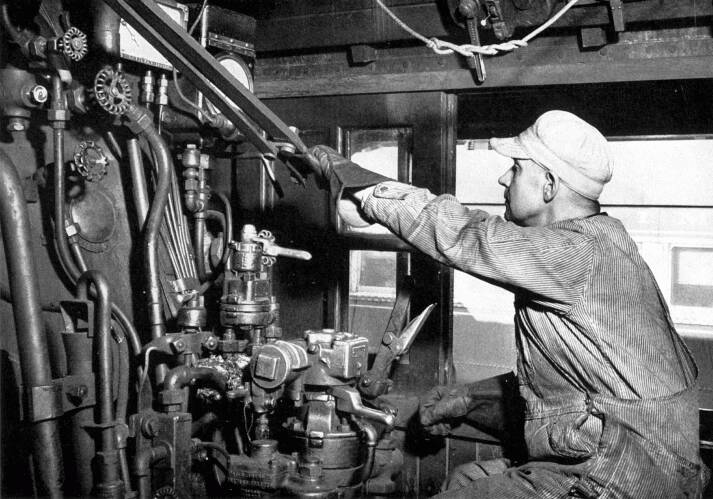
An engineer is a person who has evolved from a locomotive operator. He has a passion for all moving mechanical gadgets that have flashing lights and preferably make some kind of noise. Like trains do. As a young person he used to break up every toy he had just to find out what kind of parts it is made of, how it works and to find out whether he could put it backtogether. When an engineer grows up, he will enjoy nothing more than creating new gadgets of the above described kind.

This person owes everything to the philosophists, because without them, he would not have the foundation for making new gadgets. This is often forgotten from the engineers, who think philosophists are not creating things, they are just discussing things and writing a book or two on occasion.

Philosophists owe much to the engineers. Engineers have given philosophists tools to push further and further to the limits of understanding the world. This is often forgotten by the scientists and philosophists, who think engineers work short-sighted and focus on profit rather than common good. A computer is a good example. It was innovated by a philosophist, and productized by an engineer. Few philosophist would refuse to work without one nowadays.